Watched at Every Turn: How a Decade of Expanding Surveillance Has Quietly Dismantled American Privacy
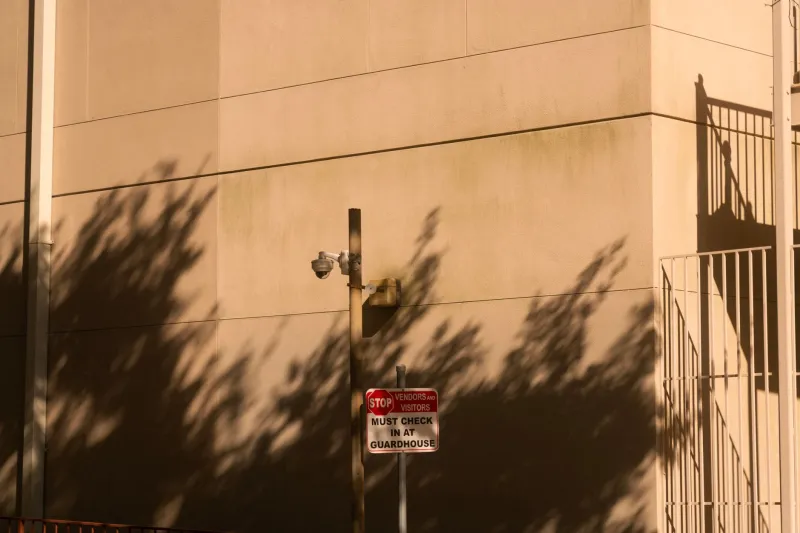
There is a particular kind of freedom that exists when a person moves through the world unobserved — when a phone call is genuinely private, when a search query belongs only to the searcher, when a walk through a city does not generate a permanent record. For much of American history, that freedom was considered self-evident, embedded in the Fourth Amendment's guarantee against unreasonable searches and seizures. Today, that guarantee is under extraordinary pressure — not from a single dramatic act of authoritarianism, but from the slow, cumulative weight of legislation, technology, and institutional habit that has normalized the surveillance of ordinary Americans.
This is not a partisan concern. Conservatives who distrust government overreach and progressives who worry about civil rights abuses share a common interest in understanding how deeply the surveillance apparatus has grown — and what it means for the future of liberty in America.
The Legal Architecture of Watching
The modern American surveillance state traces much of its legal foundation to the USA PATRIOT Act, signed into law in October 2001 in the weeks following the September 11 attacks. The legislation, passed with remarkable speed and minimal public debate, dramatically expanded the government's authority to monitor communications, conduct roving wiretaps, and access business records — including library borrowing histories and financial transactions — with limited judicial oversight.
Section 215 of the PATRIOT Act became particularly consequential. It authorized the bulk collection of telephone metadata — who called whom, when, and for how long — on a scale that was entirely unknown to the American public until 2013, when former NSA contractor Edward Snowden disclosed the program's existence. The revelation shocked civil libertarians across the political spectrum. The government had been collecting metadata on virtually every phone call made in the United States, storing it in vast databases, and querying it with minimal external accountability.
The Foreign Intelligence Surveillance Court (FISC), the secretive judicial body meant to provide oversight of these programs, approved government requests at a rate that critics described as essentially rubber-stamping. Between 2001 and 2012, the court denied only eleven of the more than 20,000 government surveillance requests it received. This is not the adversarial legal scrutiny that the Fourth Amendment envisions.
Congress did eventually respond. The USA FREEDOM Act of 2015 ended bulk telephone metadata collection in its original form, requiring the government to obtain specific court orders for individual records. It was a meaningful reform — but only a partial one. Many other surveillance authorities remained intact, and the underlying infrastructure of mass monitoring had already been built.
The Rise of the Algorithmic Eye
Legislative reform, however necessary, cannot keep pace with technology. Over the past decade, the tools available to government agencies have expanded far beyond telephone records. Facial recognition technology now operates in airports, police departments, and public spaces across the country, often with no specific legal authority governing its use and no requirement that agencies disclose when it is deployed.
Studies conducted by organizations including the Government Accountability Office and the Georgetown Law Center on Privacy & Technology have documented widespread use of facial recognition by federal agencies — including the FBI, Immigration and Customs Enforcement, and the Department of State — against databases containing the images of hundreds of millions of Americans who have never been accused of any crime. Driver's license databases, in particular, have become a primary source for facial recognition queries, meaning that the routine act of obtaining a license effectively enrolls an American into a perpetual identity lineup.
The accuracy concerns are not trivial. Independent testing has repeatedly found that many facial recognition systems perform significantly worse on images of women and people with darker skin tones, raising serious concerns about wrongful identification. At least three Americans — all Black men — have been wrongfully arrested based in part on facial recognition errors. These are not abstractions; they are real people whose liberty was threatened by algorithmic error operating within a surveillance framework that lacked meaningful accountability.
Beyond facial recognition, law enforcement agencies at the federal and local level have increasingly turned to data brokers — private companies that aggregate personal information from commercial sources — to obtain location data, browsing histories, and social connections without obtaining a warrant. Because the information is purchased rather than seized, agencies have argued it falls outside Fourth Amendment protections. Courts are only beginning to grapple with this question.
What the Courts Have Said — and Not Said
The judiciary has provided some guardrails, though inconsistently. In Carpenter v. United States (2018), the Supreme Court held that the government generally must obtain a warrant before accessing historical cell-site location data — a significant ruling that extended Fourth Amendment protection into the digital age. Chief Justice John Roberts, writing for the majority, acknowledged that the digital world demands a rethinking of older doctrines.
Yet Carpenter addressed a specific and relatively narrow question. Vast areas of digital surveillance remain in legal ambiguity. The third-party doctrine — the principle that information voluntarily shared with a third party loses Fourth Amendment protection — continues to justify enormous categories of warrantless access. In an era when nearly every meaningful human activity generates data shared with some corporate intermediary, the doctrine effectively swallows the right it purports to limit.
State courts and legislatures have occasionally moved more boldly. Illinois, Texas, and Washington have enacted biometric privacy laws that restrict the collection of facial and fingerprint data without consent. The Illinois Biometric Information Privacy Act (BIPA) has generated significant litigation and demonstrated that meaningful legal protections are achievable. But federal action remains fragmented.
Practical Steps Toward Reclaiming Privacy
The surveillance landscape is sobering, but it is not immutable. Americans who value their privacy have meaningful options — both as individuals and as citizens.
At the personal level, using end-to-end encrypted messaging applications such as Signal limits the exposure of private communications to third-party interception. Employing a reputable virtual private network (VPN) can obscure browsing activity from internet service providers. Regularly reviewing and limiting app permissions on smartphones reduces the volume of location and behavioral data passively generated. These are modest steps, but collectively they reduce the surface area of surveillance.
At the civic level, demanding transparency from local law enforcement about the surveillance technologies they deploy is both practical and powerful. Many cities have enacted surveillance technology ordinances that require police departments to disclose and seek approval for new monitoring tools before acquisition. Supporting and expanding such ordinances is one of the most direct ways communities can assert democratic control over the surveillance infrastructure that operates in their name.
At the legislative level, Americans should press their representatives to enact a comprehensive federal privacy law that establishes baseline protections for digital data, restricts warrantless access to location information, and imposes meaningful limits on government use of facial recognition technology. The current patchwork of state laws and sector-specific federal regulations leaves too many gaps.
Freedom is not simply the absence of physical restraint. It includes the liberty to think, communicate, and move through the world without the constant awareness of being recorded, catalogued, and potentially scrutinized. That freedom is worth defending — not because Americans have something to hide, but because a society in which government can observe everything is one in which the power of the state over the individual becomes nearly absolute.
The architecture of surveillance has been built incrementally, piece by piece, often in the name of security. Restoring the balance between safety and liberty will require the same patient, persistent effort — in courtrooms, in legislatures, and in the daily choices of a citizenry that understands what is at stake.