Owned in Name Only: How Intellectual Property Law Is Being Weaponized Against the American Consumer's Right to Repair
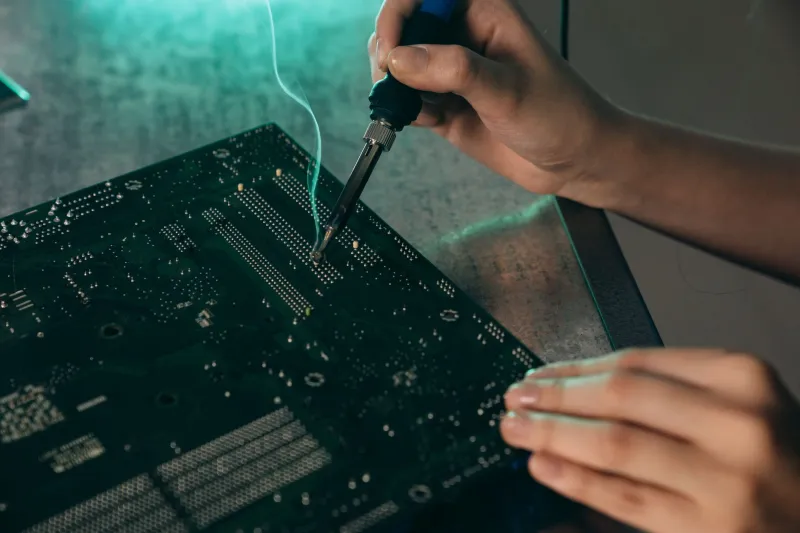
When an American farmer in Nebraska purchases a $500,000 combine harvester, the reasonable expectation is that the machine belongs to him. He paid for it. He operates it. He bears the risk when it breaks down in the middle of a harvest. Yet when that machine's onboard computer throws an error code and he reaches for a wrench, he may find himself in legally murky — and practically impossible — territory. The manufacturer has ensured that only its own authorized technicians, using proprietary diagnostic software, can service the equipment. The farmer does not own the software embedded in his machine. Under current interpretations of federal copyright law, accessing it without permission could constitute a violation.
This is not a hypothetical. It is the daily reality facing millions of American consumers, farmers, small business owners, and independent repair technicians. And it represents one of the most underreported erosions of property rights in contemporary American life.
The Legal Architecture of Manufactured Dependency
The mechanism at the center of this conflict is Section 1201 of the Digital Millennium Copyright Act of 1998 — a provision originally conceived to protect music and film from digital piracy. Over the past two decades, manufacturers have repurposed this statute with remarkable creativity. By embedding software into virtually every product they sell, from smartphones and laptops to refrigerators, tractors, and medical devices, companies have transformed ordinary consumer goods into platforms governed by intellectual property law.
The practical consequence is sweeping. Circumventing a digital lock — even to diagnose a fault in a device you purchased outright — can expose a consumer or independent technician to civil liability and, in theory, criminal prosecution. Manufacturers have leveraged this legal framework to construct what critics describe as a closed ecosystem: proprietary parts that communicate only with proprietary software, diagnostic tools available only to authorized dealers, and warranty terms that void coverage the moment an unauthorized hand touches the hardware.
The result is a system that transforms ownership into something closer to a conditional license. You may use the product. You may not fully control it.
Artificial Obsolescence and the Cost to Ordinary Americans
The economic consequences of this arrangement fall hardest on those least equipped to absorb them. When a manufacturer controls the entire repair pipeline, it controls the price. Independent repair shops — the small businesses that have historically provided affordable alternatives to manufacturer service centers — are systematically frozen out. Without access to diagnostic software, genuine replacement parts, or technical documentation, they cannot compete. Consumers are left with a stark choice: pay the manufacturer's rates or buy a new product.
This dynamic is not incidental. There is substantial evidence that planned obsolescence, accelerated by restrictive repair policies, is a deliberate business strategy. Extended service contracts, certified repair programs, and replacement cycles are profit centers. When a company can ensure that a broken product must either be serviced by its own network or discarded entirely, it captures revenue at both ends of the product lifecycle.
For working Americans, the cumulative cost is significant. A repair that an independent technician might perform for $80 becomes a $300 manufacturer service appointment — or a $1,200 replacement device. Across millions of transactions annually, this represents a substantial and largely invisible transfer of wealth from consumers to corporate service divisions.
The Grassroots Response: A Movement Takes Shape
Opposition to these practices has been building for years, and it draws from an ideologically diverse coalition that cuts across conventional political lines. Libertarians and conservatives who regard property rights as foundational have found common cause with consumer advocates and environmental groups concerned about the mountains of electronic waste generated by disposable product culture. Farmers, medical professionals, and small business owners have added their voices, each with their own industry-specific grievances.
The right-to-repair movement has achieved tangible, if incomplete, victories. As of 2023, several states — including Massachusetts, California, Colorado, and Minnesota — have enacted or are advancing legislation that requires manufacturers to provide consumers and independent repair providers with access to diagnostic tools, parts, and documentation. The Federal Trade Commission, in a 2021 report, acknowledged that manufacturer repair restrictions harm consumers and pledged greater scrutiny of the practice. The Copyright Office has periodically granted limited exemptions to Section 1201, allowing certain categories of repair activity without legal exposure.
These are meaningful steps. They are also insufficient. Federal exemptions are narrow, temporary, and subject to renegotiation. State laws vary considerably in scope and enforceability. And manufacturers have proven adept at finding new technical and contractual mechanisms to preserve their control even as specific restrictions are challenged.
Property Rights and the Limits of Corporate Power
The philosophical core of this debate is straightforward, even if the legal terrain is not. A society that takes property rights seriously must grapple honestly with what ownership actually means. If purchasing a product does not confer the right to maintain, repair, and modify it — if those rights remain perpetually with the manufacturer — then the consumer has acquired something considerably less than property. They have acquired a revocable privilege.
This distinction matters beyond the immediate inconvenience of an expensive repair bill. The capacity to maintain and extend the useful life of one's possessions is a dimension of economic self-determination. Independent repair is a livelihood for hundreds of thousands of American technicians and small shop owners. The freedom to modify and customize one's tools is a tradition embedded in American ingenuity. Each of these is diminished when manufacturers successfully assert that their intellectual property interests override the ownership rights of the people who purchased their products.
Corporate interests will frame repair restrictions as necessary protections for innovation, safety, and the integrity of complex systems. Some of those arguments carry limited merit in narrow contexts. But as a general principle applied across consumer goods, agricultural equipment, and medical devices alike, the claim that manufacturers must permanently control products after sale is not a defense of innovation. It is a defense of monopoly.
What a Free Society Requires
A genuine commitment to liberty in the economic sphere demands that ownership mean something. Legislation at both the federal and state level should establish a clear, durable right for consumers and independent technicians to access the tools, parts, and information necessary to repair products they have purchased. The DMCA's Section 1201 requires meaningful reform to prevent its continued misuse as a shield for anti-competitive repair restrictions. Warranty protections should be clarified to prevent manufacturers from voiding coverage based solely on the use of independent repair services.
None of these measures require dismantling intellectual property protections that genuinely serve innovation. They require only that those protections not be permitted to swallow the basic rights of the people who buy and own the products that intellectual property helps create.
Americans have always understood that freedom is not merely a political condition. It is also an economic one — the capacity to make decisions about one's own life, property, and livelihood without requiring permission from a corporation or a government agency. The right to repair what you own is a modest expression of that principle. The fact that it must now be defended against legal assault tells us something important about how far the balance of power has shifted — and how urgently it needs to be restored.