Permission Slips for Liberty: How City Hall Turned the Right to Assemble Into a Bureaucratic Obstacle Course
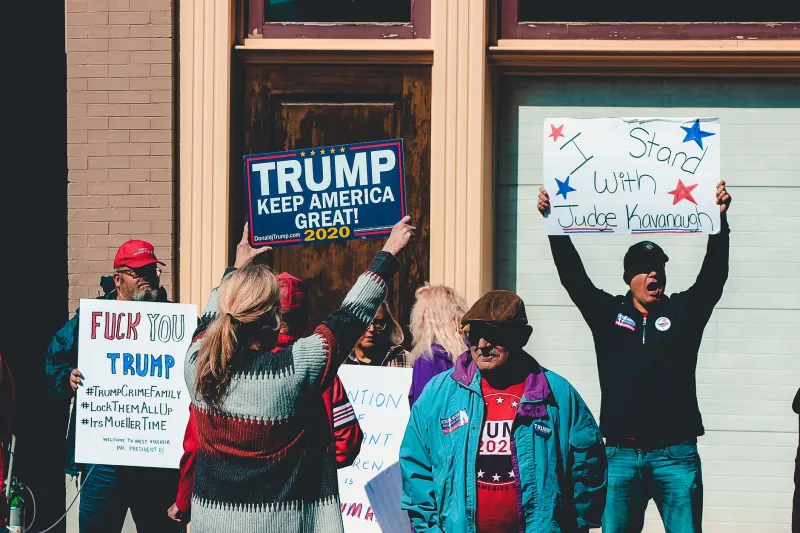
The First Amendment to the United States Constitution is, in its original framing, an absolute prohibition on government interference. Congress shall make no law, the text declares, abridging the freedom of speech or of the press — or the right of the people peaceably to assemble. There is no asterisk. There is no clause reserving the right to assemble pending municipal review.
And yet, in cities and towns across the country, that is precisely what has happened.
Through a sprawling architecture of permitting requirements, licensing fees, insurance mandates, and discretionary approval processes, local governments have effectively converted a constitutional right into a revocable administrative privilege. The permit trap is not the product of a single law or a single administration. It has been constructed incrementally, ordinance by ordinance, over decades — and it now functions as one of the most effective tools available to government authorities for managing, delaying, or suppressing public expression.
The Mechanics of Administrative Control
The permit trap operates through several interlocking mechanisms. Most cities require organizers to obtain advance permission for any gathering above a specified threshold — thresholds that vary widely and are often set low enough to capture even modest demonstrations. In many jurisdictions, the threshold is as few as twenty-five participants. Others require permits for any event that uses amplified sound, occupies a public sidewalk, or is deemed likely to disrupt traffic.
Once a permit application is submitted, organizers typically encounter a process that is neither transparent nor predictable. Approval timelines can stretch from days to weeks, rendering the system structurally incompatible with spontaneous political expression — the kind that most often arises in direct response to breaking news, government actions, or community crises. A protest organized in response to a police shooting, a legislative vote, or a local government decision may have a shelf life of hours. A permitting process with a ten-day review window does not accommodate that reality.
Fees compound the problem. Cities routinely charge permit application fees ranging from nominal sums to several hundred dollars, with additional charges for police presence, park usage, or cleanup deposits. Some municipalities require proof of liability insurance, effectively restricting organized assembly to groups with institutional backing and financial resources. For grassroots organizations — the very formations most likely to challenge entrenched power — these costs can be prohibitive.
Case Studies in Administrative Suppression
The abstract becomes concrete when examined through specific examples. In 2017, the city of Charlottesville, Virginia, became a flashpoint for national debate about permitting and public assembly. But less examined than the events themselves was the broader pattern they illuminated: that permitting processes are routinely weaponized not to ensure public safety, but to impose ideological or political preferences on who may speak and where.
In 2018, a group of activists in Grants Pass, Oregon, were cited for holding a prayer vigil on a public sidewalk without a permit. The group had gathered peacefully, occupied no more space than ordinary pedestrian traffic, and posed no discernible threat to public order. The citations were eventually dropped, but not before the participants had been subjected to legal exposure, financial uncertainty, and the chilling effect that such encounters invariably produce.
In New York City, permit denials for street demonstrations have been challenged repeatedly in federal court. The city's Parks Department, which administers permit applications for events in public spaces, has been found on multiple occasions to have applied its standards inconsistently — approving permits for some viewpoints while subjecting others to heightened scrutiny or outright denial. Federal courts have been clear that content-neutral time, place, and manner restrictions are constitutionally permissible. They have been equally clear that discretionary permit systems that allow administrators to favor some speakers over others are not.
The Constitutional Framework — and Its Practical Erosion
The Supreme Court has addressed the tension between government regulation and the right of assembly on numerous occasions. In Shuttlesworth v. City of Birmingham (1969), the Court struck down a parade permit ordinance that vested city officials with broad discretion to grant or deny permits based on their assessment of community welfare. Justice Potter Stewart, writing for the majority, was unambiguous: a law that gives officials virtually unbridled authority to permit or prohibit the exercise of a constitutional right is constitutionally infirm.
The legal doctrine that emerges from decades of case law is relatively coherent. Permit requirements must be content-neutral, must serve a significant governmental interest, must leave open alternative channels for communication, and must not vest excessive discretion in administrative officials. They must also provide for prompt judicial review and contain clear, objective criteria.
In practice, however, many municipal ordinances fall well short of these standards — and enforcement agencies rarely face meaningful accountability when they are applied in discriminatory or suppressive ways. The gap between constitutional doctrine and street-level reality is wide, and it is ordinary citizens who fall into it.
The Chilling Effect: Suppression Without Confrontation
Perhaps the most insidious aspect of the permit trap is not the fines or the legal citations it generates, but the deterrence it produces long before any enforcement action occurs. Civil libertarians refer to this phenomenon as the chilling effect — the tendency of overbroad or uncertain legal requirements to discourage lawful activity by imposing risk, cost, and uncertainty on those who might otherwise exercise their rights.
For many Americans, particularly those from communities with fraught histories of interaction with law enforcement, the prospect of organizing a gathering that might attract police attention — permit or no permit — is itself a powerful deterrent. When the permitting process adds layers of bureaucratic complexity, financial exposure, and administrative discretion, the deterrent effect multiplies. The result is a public square that is formally open but functionally constrained.
This is not an accident. Municipal officials and their legal advisors are well aware that procedural complexity suppresses participation. The permit trap is, in this sense, a feature rather than a bug of systems designed to manage public expression rather than protect it.
Toward Accountability and Reform
Restoring the right of assembly to its constitutional footing requires action on several fronts. Legislatures at the state level should establish clear preemptive standards for municipal permit ordinances — mandating objective criteria, strict timelines, and meaningful appeal mechanisms. Courts should apply heightened scrutiny to permit denials that affect political or expressive activity, and should be prepared to award attorneys' fees and damages when officials act in bad faith.
Civil society organizations — the ACLU, the Institute for Justice, and others — have pursued important litigation in this space, but litigation is reactive by nature. The more durable solution is legislative reform that removes administrative discretion from the equation entirely, replacing it with clear, ministerial processes that treat assembly as the right it is rather than the privilege it has become.
Freedom of assembly is not a courtesy extended by the state to citizens who fill out the correct forms. It is a foundational guarantee, rooted in the conviction that the power of government must yield to the sovereign right of the people to speak, to gather, and to demand accountability from those who govern in their name. When city hall places itself between citizens and that right, it is not administering public order. It is administering power — and that demands scrutiny, resistance, and reform.