The Covenant Is the Constitution: Inside the Private Governments That Can Foreclose on Your Home
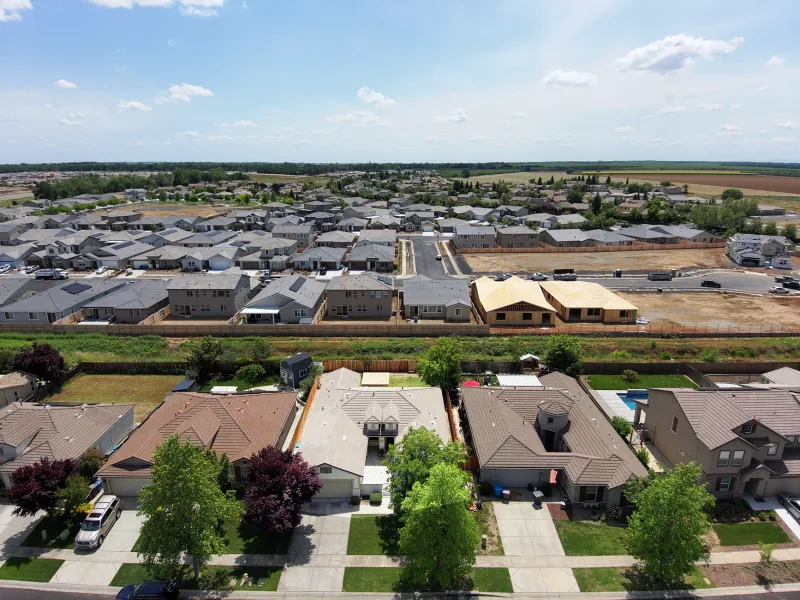
Across the United States, tens of millions of people live under the jurisdiction of a homeowners association. They are usually described as private clubs, voluntary arrangements among neighbors, and nothing more than a line item at closing. In practice, many HOAs levy fines, file liens, restrict political signs, regulate the color of a front door, and in some states foreclose on homes—all without the ordinary machinery of public accountability that accompanies a city council or a traffic court.
The central question is not whether people should be allowed to make private contracts about shared property. They should. The question is what happens when those contracts become a system of private government, complete with a legislature, a judiciary, and a collections agency, and when the people subject to it have fewer procedural protections than a defendant contesting a parking ticket.
A Government by Contract
Covenants, conditions, and restrictions—CC&Rs—run with the land. A buyer generally accepts them as part of the purchase, whether or not the buyer reads them. The board of directors enforces them. The association can assess dues, impose fines, suspend access to common amenities, and record liens. In some jurisdictions, the association can foreclose on the lien, which means a dispute over a few thousand dollars in assessments can put a family's home at risk.
Defenders of HOAs rightly note that these arrangements can protect property values, maintain shared spaces, and resolve disputes that would otherwise land in court. But the same structure concentrates enormous discretion in a board that is often elected by a small fraction of owners, meets irregularly, and operates with limited transparency. The result is a layer of governance that is neither fully private nor fully public, and that is precisely why it can escape the safeguards attached to both.
The Due-Process Gap
The procedural weakness is the most striking feature. A municipal code enforcement officer who issues a citation must generally follow written rules, provide notice, and submit to a hearing before an impartial tribunal. An HOA board often acts as complainant, prosecutor, and judge. Notice may be a letter or an email. Hearings may be brief and conducted without counsel. Appeals may be limited or nonexistent. Fines can accrue daily, and the association may recover its attorney fees from the owner.
The gap is not merely a matter of inconvenience. When a lien attaches to a home, the owner faces a cloud on title that can impede refinancing or sale. When foreclosure is possible, the stakes become severe. Some states have tightened the rules in recent years, requiring mediation or limiting foreclosure for fines, but the baseline remains uneven. The owner's remedy is often to hire a lawyer at a cost that exceeds the original dispute—a reality that makes the system self-enforcing.
Speech, Signs, and the Common Space
HOAs also regulate expression. Rules governing political signs, holiday decorations, religious displays, and door-mounted cameras are common. Because the First Amendment generally restrains government rather than private associations, an HOA can restrict speech in ways a municipality could not. State statutes sometimes create protections, especially for political signs during election season, but those protections vary widely.
The rise of home surveillance and digital neighborhood networks adds another layer. Boards may demand access to camera footage, restrict doorbell cameras, or regulate online communication among owners. These are not trivial matters. The home is the place where freedom of conscience and expression is most intimate, and private rules that govern the front yard can shape the public life of a neighborhood.
2026: A Reform Season
In 2026, state legislatures have continued to revisit the balance. Reform packages have advanced in several states, with proposals to cap certain fines, require open meetings and records, mandate mediation before foreclosure, and give owners clearer rights to challenge board actions. Some measures focus on financial transparency after high-profile disputes over reserve funds and special assessments. Others address the concentration of power by making it easier to recall board members or by requiring competitive bidding for large contracts.
The details matter. A fine cap that is too low can be ignored; a mediation requirement that lacks enforcement can become a delay tactic. But the direction of the debate is significant. Lawmakers are beginning to treat HOAs not as purely private clubs but as institutions that exercise public-like authority over housing, speech, and property—and therefore deserve public-like safeguards.
How Owners Can Push Back
Ordinary owners are not powerless. The first step is information: request governing documents, budgets, board minutes, and contracts. The second is participation: attend meetings, organize with neighbors, and run for the board. The third is escalation: use state statutes that require records access or mediation, and press legislators for clearer protections.
Freedom at home depends on more than the absence of a government agent at the door. It depends on whether private power is answerable to the people it governs. The covenant may be a contract, but when it can fine, lien, and foreclose, it is also a constitution. It should be written and enforced with the same concern for due process that Americans expect from any other government.