Locked Out: The Invisible Regulatory Wall Keeping Ordinary Americans From Owning Land, Building Homes, and Living Freely
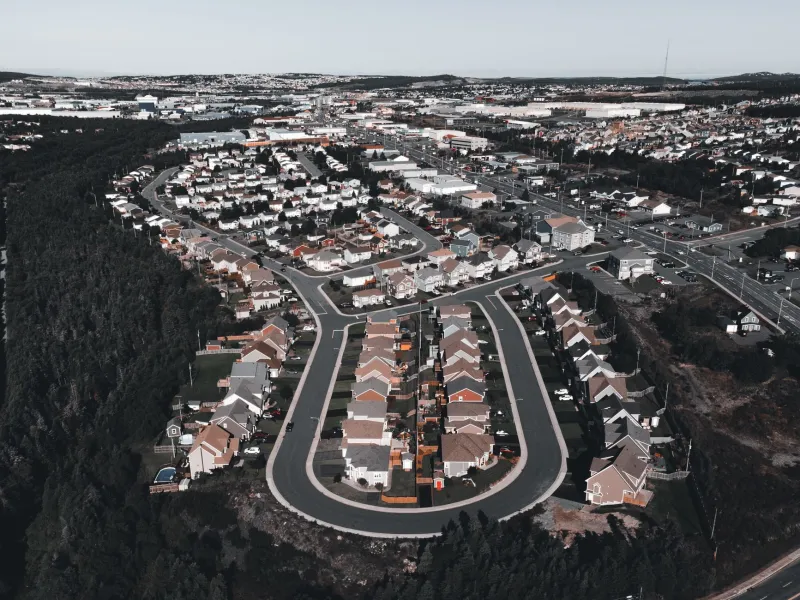
Property ownership has occupied a central position in the American conception of liberty since the republic's founding. To own land was to possess independence — a material foundation for self-governance, family stability, and economic agency that no landlord or employer could revoke. That ideal remains rhetorically potent. In practice, however, a sprawling apparatus of local regulation has made the realization of that ideal increasingly difficult for ordinary Americans — not through overt prohibition, but through the slow accumulation of rules, restrictions, and bureaucratic requirements that serve established interests while raising the cost of entry for everyone else.
Zoning law sits at the center of this apparatus. What began as a Progressive Era tool for separating industrial uses from residential neighborhoods has evolved, over the course of a century, into an extraordinarily detailed system for controlling land use in ways that have little to do with public safety and a great deal to do with preserving the property values and neighborhood character preferences of incumbent owners.
The Anatomy of Exclusion
Single-family zoning — the requirement that parcels of land be developed with one detached residence and nothing else — covers the majority of residential land in most American cities. In cities such as San Jose, California, and Charlotte, North Carolina, single-family zoning has historically governed upwards of eighty percent of residential land. The effect is to legally prohibit the construction of duplexes, townhomes, small apartment buildings, and accessory dwelling units on the vast majority of urban land, regardless of what property owners might wish to build or what the market might support.
This is not a passive outcome. It is an active policy choice, renewed through every zoning board meeting and variance denial, that limits housing supply in precisely the locations where demand is highest. The consequences for affordability are severe and well-documented. When supply cannot respond to demand, prices rise. When prices rise beyond what median-income households can sustain, those households are displaced — pushed to longer commutes, less desirable locations, or rental dependency that forecloses the wealth-building potential of ownership.
Building codes compound the effect. Many jurisdictions impose requirements — minimum square footage, mandated parking ratios, prescribed materials and construction methods — that bear no defensible relationship to structural safety or occupant welfare. These requirements add tens of thousands of dollars to the cost of new construction, effectively pricing out the modest, affordable housing typologies that served working-class Americans for generations. The small bungalow, the modest starter home, the mixed-use building with a shop below and apartments above — these forms are frequently illegal under contemporary codes, not because they are unsafe, but because the regulatory framework was written by and for a constituency that prefers them excluded.
Who Benefits, and Who Pays
The political economy of zoning is not complicated. Those who already own property in a jurisdiction generally benefit from restrictions that limit new supply, sustain or increase property values, and preserve the character of the neighborhood as it currently exists. Those seeking to enter the market — younger Americans, lower-income households, recent immigrants, and aspiring entrepreneurs — bear the costs of those restrictions in the form of higher prices, fewer options, and diminished opportunity.
Local government structures reinforce this dynamic. Zoning decisions are made by planning commissions and city councils whose meetings are attended, disproportionately, by property owners with the time, resources, and motivation to engage in the process. Renters, prospective buyers priced out of a jurisdiction, and future residents who do not yet exist have no seat at the table. The result is a regulatory process systematically biased toward the interests of the already-established against the interests of the aspiring.
This is not a partisan observation. Restrictive zoning flourishes in cities governed by both major parties. It is, rather, a structural feature of a system in which those who benefit from restriction hold disproportionate power over the regulatory process.
The Entrepreneurial Cost
The consequences of zoning overreach extend beyond housing. Restrictions on mixed-use development prevent homeowners from operating small businesses on their properties. Home-occupation ordinances limit the types and scales of enterprise that may be conducted from a residence. Minimum lot-size requirements and setback rules govern not just where a building sits, but what activities may occur within it.
For the entrepreneur who wishes to open a neighborhood bakery, a small workshop, or a consulting practice from a home office, local zoning codes frequently constitute the primary barrier to entry — not the market, not the competition, but a set of rules written to preserve a particular vision of neighborhood uniformity. The freedom to use one's property productively, to build wealth through enterprise on land one owns, is far more constrained than most Americans appreciate.
Resistance and Reform
The past several years have seen a meaningful shift in the politics of land use, driven by an unlikely coalition of libertarian-leaning policy advocates, housing affordability activists, and fiscally conservative reformers who have recognized that restrictive zoning is neither inevitable nor defensible.
Minnesota eliminated single-family-only zoning statewide in 2023, permitting duplexes and triplexes by right across all residential land. California has enacted a series of reforms allowing accessory dwelling units and, in some circumstances, multifamily development near transit corridors. Montana passed sweeping legislation in 2023 permitting a range of housing types in areas previously restricted to single-family development. These are imperfect measures, and implementation remains contested, but they represent a recognition that the status quo is neither just nor sustainable.
At the local level, grassroots organizations — often operating under the banner of YIMBY, or "Yes In My Backyard" — have begun mobilizing to counterbalance the entrenched opposition that has historically dominated planning processes. Their argument is straightforward: the freedom to build, to own, and to use property as one sees fit is a fundamental liberty, not a privilege to be rationed by regulatory bodies beholden to incumbent interests.
The Liberty Imperative
Property rights have always been understood, in the American tradition, as foundational to the broader structure of individual freedom. A person who cannot own, build upon, or use land without navigating a labyrinth of politically determined restrictions is not, in any meaningful sense, fully free. The regulatory apparatus that governs American land use has grown so dense, so detailed, and so systematically tilted toward established interests that it now functions as a significant barrier to the social mobility and economic independence that property ownership was always meant to enable.
Reforming this system is not a matter of eliminating all regulation — legitimate public interests in safety, environmental protection, and community planning exist and deserve consideration. It is a matter of insisting that regulation serve those interests honestly, transparently, and without using the apparatus of local government to protect incumbent property owners at the expense of everyone else. The American Dream of owning land, building a home, and living on one's own terms is worth defending. The first step is acknowledging how thoroughly the current system has made that dream inaccessible — and demanding something better.