The Classroom Belongs to the Family: America's Homeschooling Movement and the Fight for Educational Self-Determination
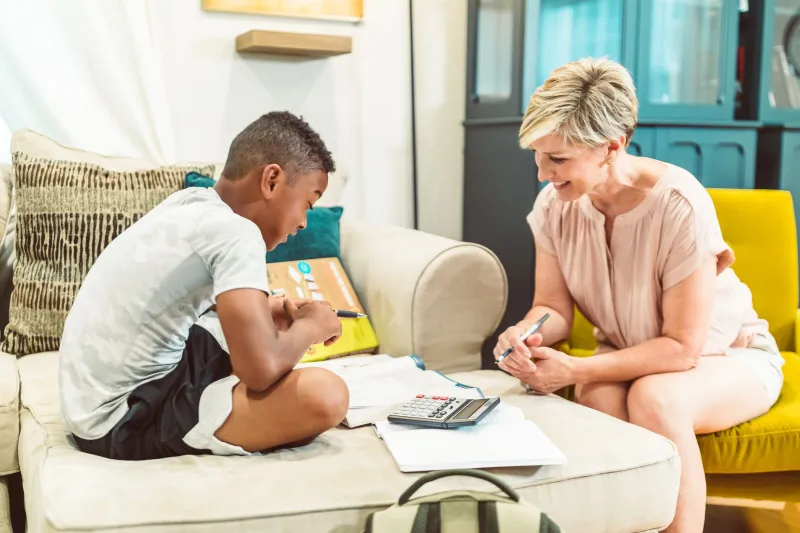
Somewhere in a suburb of Nashville, a mother is teaching her thirteen-year-old the causes of the American Revolution from primary sources rather than a state-approved textbook. In rural Montana, a father is walking his children through algebra on a kitchen table, then spending the afternoon on a working ranch that teaches lessons no curriculum committee ever designed. In Houston, a Black family that grew frustrated with a system that repeatedly failed their children has built a learning environment tailored precisely to who those children are.
These families share almost nothing in terms of geography, politics, or pedagogy. What they share is a decision: that the education of their children is fundamentally their responsibility, and that the institutional mechanisms of American public schooling no longer serve that responsibility adequately — if they ever did.
Homeschooling in the United States has experienced remarkable growth. Estimates suggest that between 3.3 and 4 million children are now educated outside of traditional schools, a figure that accelerated sharply during the pandemic and has not retreated to pre-2020 levels. This is not a temporary disruption. It is a structural shift, and it raises questions that a free society ought to take seriously.
The Philosophical Stakes
The debate over who controls education is not merely a policy dispute. It is a contest over a foundational question: to whom does a child's mind primarily belong?
The progressive tradition in American education, dating at least to Horace Mann's common school movement of the nineteenth century, has held that the state has a legitimate and paramount interest in shaping the next generation of citizens. From this view, public education is not merely a service — it is a civic project, a mechanism by which a diverse society transmits shared values, common knowledge, and democratic habits of mind.
The libertarian and classical liberal counter-tradition holds something different: that parents are the primary stewards of their children's formation, that the state's educational role is derivative rather than original, and that centralized curriculum control — regardless of the intentions behind it — carries inherent risks of ideological capture and intellectual conformity.
Both positions contain genuine insight, and the tension between them is not easily resolved. But it is worth noting which of the two has, in recent decades, been institutionally dominant — and what that dominance has produced.
What Is Driving the Exodus
Ask homeschooling families why they left the system, and the answers are varied but revealing. Some cite concerns about academic rigor, frustrated by schools that have reduced instructional time for core subjects in favor of administrative priorities. Others point to safety — both physical and psychological — in environments where bullying, social media pressures, and institutional dysfunction have made traditional schooling actively harmful for their children.
A substantial number cite ideological concerns. Battles over curriculum content — whether involving critical race theory frameworks, gender identity instruction, or the handling of American history — have convinced many parents that public schools no longer reflect, or even respect, their values. This is a politically diverse group: conservative Christian families who object to secular progressive content share the homeschooling space with progressive families who find standardized testing dehumanizing and traditional pedagogy ill-suited to their children's needs.
What unites them is not ideology but agency — a conviction that they, as parents, are better positioned than any district administrator to make educational decisions for their specific children.
The Evidence on Outcomes
Critics of homeschooling frequently raise legitimate concerns about socialization, academic consistency, and the potential for educational neglect in unregulated environments. These concerns deserve honest engagement rather than dismissal.
The research on academic outcomes is, on balance, favorable to homeschooling — homeschooled students consistently score above national averages on standardized assessments and college entrance exams. Socialization concerns, while understandable, often rest on an outdated image of isolated children confined to kitchen tables. Contemporary homeschooling families typically participate in co-ops, community programs, sports leagues, and hybrid school arrangements that provide extensive peer interaction.
The neglect question is more serious and warrants careful regulatory attention. A small number of documented cases in which homeschooling was used to conceal abuse have prompted calls for increased oversight. The challenge is crafting oversight mechanisms that protect genuinely vulnerable children without creating a bureaucratic apparatus that treats all homeschooling families as presumptive threats. Most state-level homeschooling advocates have demonstrated willingness to support reasonable accountability measures; the line between accountability and harassment is one that legislators must draw with care.
Decentralization as a Democratic Value
There is a broader argument to be made here that transcends the specific merits of homeschooling: decentralized education, in its many forms, serves the long-term health of a free society.
A nation in which all children receive substantially the same education, shaped by the same institutional priorities and filtered through the same bureaucratic sensibilities, is a nation that has sacrificed intellectual diversity on the altar of administrative efficiency. The vitality of democratic culture depends on citizens who think differently, who have been exposed to different frameworks, and who arrive at civic life with genuinely distinct perspectives.
This is not an argument for abandoning shared civic knowledge — a common understanding of constitutional principles, historical events, and democratic processes remains essential. It is an argument for recognizing that the monopoly model of education is neither the only way to transmit that knowledge nor necessarily the best.
Charter schools, microschools, learning pods, classical academies, and homeschooling cooperatives represent a genuine diversification of the educational landscape. Rather than viewing this diversification as a threat to public education, policymakers might consider whether it represents a healthy correction to an institution that has, in many communities, ceased to serve its stated purpose.
The Road Ahead
The families choosing homeschooling are not, by and large, making a statement about politics. They are making a statement about their children — a declaration that no bureaucracy, however well-intentioned, understands those children better than they do.
In a free society, that declaration deserves respect. The question for legislators, educators, and citizens is not how to suppress this movement but how to engage with what it reveals: that millions of American families no longer trust centralized institutions to educate their children, and that this loss of trust is itself a civic emergency worth taking seriously.
The classroom that belongs to the family is not a threat to the republic. It may, in fact, be one of its more durable expressions.