Sensors, Algorithms, and the City That Never Stops Watching
The Promise on the Brochure
The pitch is seductive. Smarter traffic signals that reduce commute times. Gunshot-detection microphones that dispatch police faster. Waste management sensors that optimize garbage collection routes. Energy grids that adjust in real time to shifting demand. Municipal officials across the country — from Kansas City, Missouri, to Columbus, Ohio, to San Diego, California — have embraced the vocabulary of the smart city with genuine enthusiasm, and the technology vendors selling these systems have been more than happy to supply both the hardware and the rhetoric.
The brochures rarely mention what gets built alongside the efficiency gains: an infrastructure of continuous observation that reaches into nearly every corner of public life. Residents who walk to work, drive their children to school, or simply sit on a park bench are generating data points that flow into centralized municipal platforms, where algorithms sort, analyze, and retain behavioral patterns that most Americans would have considered profoundly private just a decade ago.
The question that city councils seldom pause to ask — and that residents are rarely given the opportunity to answer — is a straightforward one: who authorized any of this?
A Network Built in Plain Sight
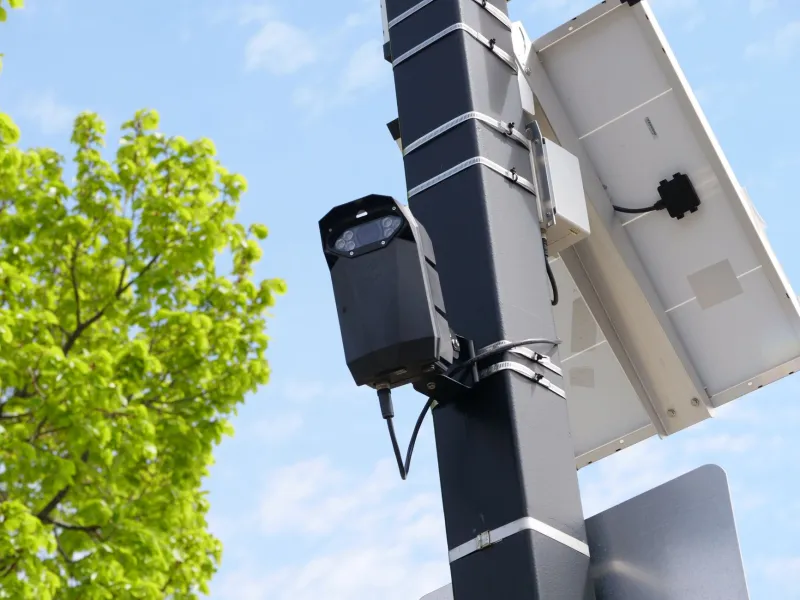
Smart city infrastructure tends to arrive incrementally, which is part of what makes it so difficult to resist. A city installs license plate readers at major intersections, ostensibly to recover stolen vehicles. A few months later, networked cameras with facial recognition capability are added to transit hubs for 'passenger safety.' Acoustic sensors go up near entertainment districts under the justification of noise ordinance enforcement. Environmental monitors — measuring air quality, temperature, pedestrian density — are embedded in street furniture.
None of these deployments, taken individually, necessarily triggers a public outcry. Each is framed in the language of service delivery. Collectively, however, they constitute something that civil liberties scholars have begun describing with increasing urgency: a persistent surveillance lattice that maps the movements and habits of an entire urban population in real time.
In San Diego, residents discovered that the city had installed more than 3,000 'smart streetlights' equipped with cameras and microphones — a program launched with minimal public deliberation and, critically, data-sharing agreements with law enforcement that the public did not know existed until investigative journalists brought them to light. The city eventually suspended the program after community backlash, but the episode illustrated a pattern that has repeated itself in municipalities across the country: deployment first, accountability later — if at all.
The Consent Problem
American legal tradition has long held that government power requires a basis in public authorization. Constitutions are ratified. Ordinances are passed by elected councils. Agencies operate under statutory mandates. The smart city, however, has developed a troubling habit of outrunning these accountability structures.
Many surveillance deployments are funded through federal grants — often from the Department of Transportation or the Department of Homeland Security — which means they bypass the local budget approval processes that would otherwise expose them to public scrutiny. Vendors frequently retain ownership of the data collected, or are granted broad licensing rights that allow them to aggregate and monetize behavioral information derived from public spaces. Residents, meanwhile, are offered no meaningful opt-out mechanism. You cannot choose not to be tracked simply by choosing not to use a city service; the sensors track you whether you engage with the infrastructure or not.
This is a fundamental departure from the consent frameworks that govern virtually every other form of data collection in American life. A website must obtain your agreement before placing tracking cookies on your browser. A medical provider cannot share your health records without authorization. But a city government can deploy a network of AI-powered cameras that logs your daily movements, shares that log with private contractors, and retains it indefinitely — and your only formal recourse is to attend a city council meeting that most residents will never know is happening.
When the Vendor Becomes the Government
The role of private technology companies in smart city deployments deserves particular scrutiny. Firms such as Alphabet's Sidewalk Labs — whose ambitious Toronto waterfront project collapsed in 2020 amid fierce privacy objections — represent an extreme version of a quieter dynamic playing out in American cities every day. Municipal governments, often lacking internal technical expertise and facing constrained budgets, outsource not just the hardware but the analytical architecture of their surveillance systems to private vendors whose primary obligations run to shareholders, not citizens.
The implications are significant. When a private company holds the data generated by a city's sensor network, the public's ability to audit that data, challenge its use, or demand its deletion is severely limited. Freedom of Information Act requests may not reach vendor-held databases. The contractual terms governing data retention and sharing are frequently treated as proprietary business information, shielded from public disclosure. Cities, in effect, surrender meaningful oversight of their own surveillance apparatus the moment they sign a vendor contract.
This is not a hypothetical concern. Researchers at Georgetown Law's Center on Privacy and Technology have documented numerous instances in which law enforcement agencies accessed smart city data through informal channels that bypassed the warrant requirements courts have historically imposed on government surveillance. The architecture of the smart city, in other words, does not merely enable surveillance — it actively facilitates the erosion of the Fourth Amendment protections that have historically constrained it.
The Resistance Is Growing
The good news — and there is genuine good news here — is that Americans are beginning to push back with meaningful effect. More than a dozen cities, including San Francisco, Boston, and Portland, Oregon, have enacted ordinances restricting or outright banning the use of facial recognition technology by municipal agencies. A growing number of state legislatures are considering comprehensive frameworks that would require public notice and approval before cities can deploy new surveillance infrastructure.
Civil liberties organizations, including the ACLU and the Electronic Frontier Foundation, have developed model legislation and litigation strategies aimed at closing the consent gaps that smart city deployments routinely exploit. Community groups in cities ranging from Detroit to Oakland have organized sustained campaigns that forced municipal governments to disclose surveillance contracts they had hoped to keep quiet.
These victories are real, but they remain fragile. Federal funding streams continue to incentivize smart city adoption without attaching meaningful privacy conditions. Vendors continue to innovate faster than legislators can respond. And the ideological momentum in urban governance still runs strongly toward technocratic efficiency, with liberty treated as an inconvenient friction to be managed rather than a value to be protected.
Efficiency Is Not a Substitute for Freedom
There is nothing inherently wrong with cities using technology to deliver better services. Faster emergency response, cleaner streets, and reduced traffic congestion are legitimate public goods. The problem is not the aspiration — it is the assumption, embedded in the smart city model as it currently operates, that these goods can be purchased with the currency of mass surveillance, and that residents have no standing to object to the transaction.
Freedom is not merely the absence of physical restraint. It includes the liberty to move through public space without being catalogued, the right to conduct the ordinary business of daily life without generating a permanent behavioral record, and the expectation that government power — including the power to observe — operates within boundaries that citizens themselves have authorized.
The smart city, as currently conceived by most of its advocates, does not honor these principles. It treats the city as a system to be optimized and its residents as data to be harvested. Before another sensor goes up, another algorithm goes live, or another vendor contract gets signed, Americans deserve a genuine conversation about what kind of cities — and what kind of freedom — they actually want.