The New Gatekeepers: Corporate Deplatforming, Constitutional Limits, and the Question Nobody Wants to Answer
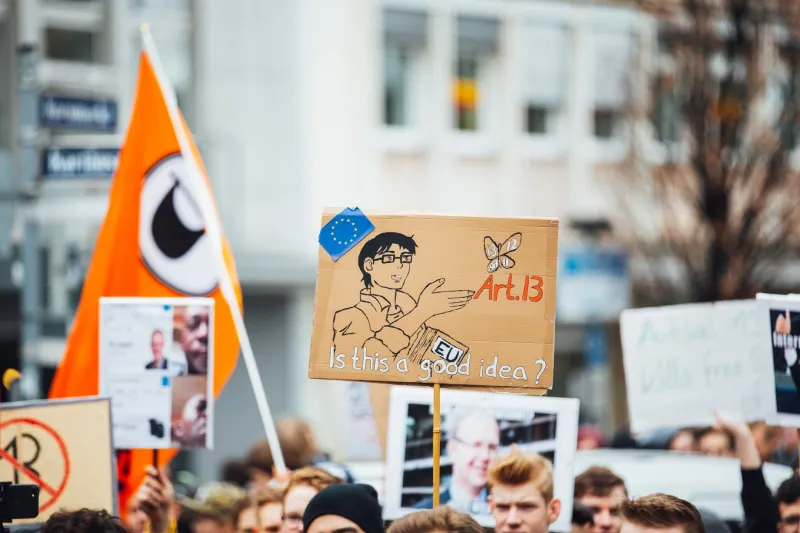
The First Amendment is, in the formal legal sense, a restriction on government. It prohibits Congress — and by extension, the executive branch and the states — from abridging freedom of speech. It says nothing about what a private corporation may or may not do with the content that flows through its platforms. That distinction, clear on paper, is becoming increasingly difficult to defend as a meaningful protection of free expression in American life.
The collision between social media-driven cancellations and constitutional free speech principles has generated enormous heat and relatively little clarity. Partisans on both sides have reduced the debate to familiar talking points: one camp insists that deplatforming is censorship, full stop; the other maintains that private companies have every right to enforce their own terms of service. Neither position is adequate to the complexity of what is actually happening.
What the Law Says — and What It Doesn't
The legal framework governing online speech is, to put it charitably, a patchwork. Section 230 of the Communications Decency Act grants platforms broad immunity from liability for user-generated content while simultaneously permitting them to moderate that content in good faith. The provision was written in 1996, when the internet was a novelty and the idea of a single company controlling the primary channels of public discourse was not a serious policy concern.
The constitutional landscape is similarly unsettled. The Supreme Court's 2017 ruling in Packingham v. North Carolina established that social media platforms constitute an important venue for speech and civic participation, but stopped well short of imposing First Amendment obligations on private operators. More recently, NetChoice v. Paxton — which examined Florida and Texas laws seeking to restrict platform moderation — produced a fractured Court that acknowledged the profound difficulty of applying twentieth-century free speech doctrine to twenty-first-century communications infrastructure.
What the law currently provides, in essence, is this: platforms may restrict virtually any speech they choose, and users have limited legal recourse. Whether that framework is adequate to the moment is a question the courts have been reluctant to answer directly.
The Scale Problem
The traditional defense of private moderation rests on a marketplace-of-ideas logic: if one platform restricts your speech, you can take it elsewhere. That argument made sense when the media landscape was genuinely pluralistic. It is considerably weaker when three or four companies control the platforms through which a substantial majority of Americans encounter news, political commentary, and civic debate.
This is the scale problem, and it is the crux of what makes the current moment genuinely novel. When a local newspaper declined to publish a letter to the editor in 1975, the writer could submit it elsewhere, post it on a community bulletin board, or self-publish a pamphlet. When Twitter — now rebranded as X — suspends an account with millions of followers, or when YouTube demonetizes a channel, or when Apple and Google simultaneously remove an application from their stores, the practical effect on the affected speaker's ability to reach an audience is qualitatively different from anything the framers of the First Amendment or the drafters of Section 230 could have anticipated.
The companies that exercise this power are not governments. But they perform functions — regulating public discourse, determining what information is accessible, adjudicating disputes about acceptable expression — that, in earlier eras, were understood to require public accountability.
Landmark Cases and Their Limits
The litigation landscape reflects the underlying confusion. High-profile deplatforming cases have produced inconsistent outcomes and, more importantly, have failed to establish durable principles.
The removal of former President Donald Trump from major platforms following the events of January 6, 2021, generated enormous controversy and a wave of legal challenges. Those challenges largely failed on First Amendment grounds, for the straightforward reason that the First Amendment does not apply to private actors. But the episode illuminated, with unusual clarity, the degree to which platform decisions can shape political outcomes in ways that have no obvious accountability mechanism.
Cases involving lesser-known individuals — conservative commentators, progressive activists, public health dissenters, and others who have found themselves on the wrong side of platform enforcement — have similarly struggled to find legal footing. The terms of service agreements that govern platform use are drafted by the platforms themselves, interpreted by the platforms themselves, and enforced by the platforms themselves. The appeals processes that exist are internal, opaque, and inconsistently applied.
This is not a left-right issue, despite the way it is typically framed. Progressive voices have been deplatformed. Conservative voices have been deplatformed. The common denominator is not ideology but institutional power: the power of a small number of private entities to determine, without meaningful external review, whose voice participates in the digital public square.
The Accountability Gap
Governments that restrict speech are subject to constitutional constraints, judicial review, legislative oversight, and electoral accountability. Corporations that restrict speech are subject to none of these mechanisms in any systematic way. That asymmetry — which is real, structural, and growing — is what the current legal and policy framework fails to address.
The libertarian response — that the market will discipline companies that over-moderate — has not been borne out by experience. Network effects, switching costs, and the dominance of a handful of platforms have proven more powerful than competitive pressure. The progressive response — that platforms should moderate more aggressively — addresses a different problem entirely and does nothing to resolve the accountability deficit.
A more productive framing asks: what obligations, if any, should entities that function as essential public communications infrastructure bear toward the users whose speech they govern? Some scholars have proposed common-carrier frameworks analogous to those applied to telephone companies. Others have advocated for algorithmic transparency requirements, independent appeals tribunals, or due process standards for moderation decisions. None of these proposals is without complications, but all of them take seriously the underlying problem in a way that the current debate largely does not.
Freedom Requires More Than Legal Technicalities
The freedom to speak means something only if it includes a meaningful opportunity to be heard. The legal architecture of the First Amendment was built for a world in which the primary threats to expression came from the state. That world has not disappeared, but it has been joined by another: one in which private entities exercise governmental-scale power over public discourse while remaining insulated from the accountability norms that constrain government.
Addressing that reality will require intellectual honesty from partisans on both sides, and a willingness to engage with hard questions about power, accountability, and the conditions under which free expression can actually flourish. The First Amendment is a floor, not a ceiling. A society genuinely committed to liberty ought to be capable of building higher.