Speech With a Cover Charge: The Quiet Fiscal Filter on Public Protest
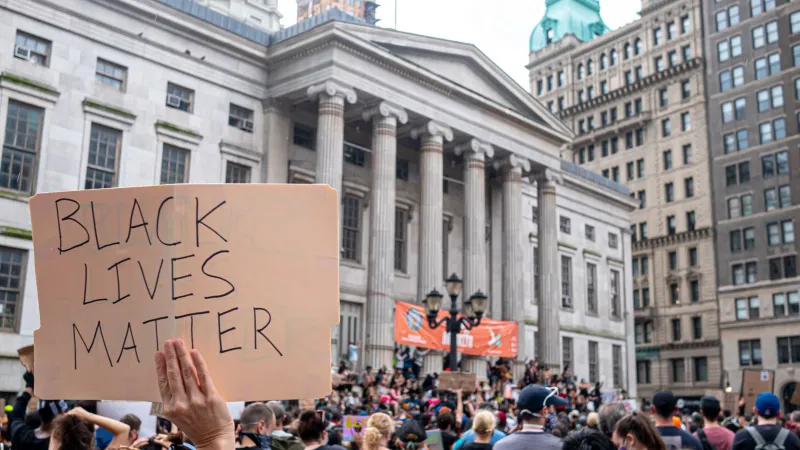
The First Amendment protects the right of the people peaceably to assemble. It does not promise a free stage, a sound system, or a police escort. But a growing number of American cities have discovered that the right to protest can be filtered through an invoice. Before a group can gather on a public sidewalk or in a plaza, organizers may be told to pay a permit fee, buy a liability policy, post a bond, and reimburse the police for overtime. Each charge has a plausible administrative rationale. Together, they can function as a quiet prior restraint—a price tag attached to speech before the speech occurs.
The Invoice as Gatekeeper
Most municipalities regulate demonstrations for legitimate reasons: traffic flow, emergency access, crowd safety. The trouble begins when cost recovery becomes the organizing principle. A small church group planning a prayer vigil may be quoted a few hundred dollars for a permit and several thousand for insurance. A student organization protesting a campus-adjacent policy may learn that anticipated counterdemonstrations require a police presence—and that the original speaker must pay for it. The figures are often not published in advance, and they can arrive days before the event, leaving little time to fundraise or negotiate.
These requirements are not trivial for ordinary Americans. A $1 million liability policy may be routine for a corporation and prohibitive for a neighborhood association. A police overtime estimate can turn a peaceful march into a financial gamble. When the price of speaking depends on the anticipated controversy surrounding the message, the government is no longer merely managing a crowd. It is making a judgment about which speech is worth the cost.
What the Courts Have Said
The Supreme Court has long allowed permit schemes for parades and demonstrations, but only when they are narrow, objective, and nondiscriminatory. In Cox v. New Hampshire, the Court upheld a modest licensing system while warning that officials cannot use it to deny a group the right to assemble. In Forsyth County v. Nationalist Movement, the Court struck down a permit fee that varied with the content of the message and the expected cost of police protection. A fee that rises because listeners may react angrily, the Court reasoned, gives government a financial incentive to silence unpopular speakers.
Lower courts have since wrestled with the harder cases: police overtime, security deposits, insurance mandates, and reimbursement for costs incurred when counterprotesters appear. The results are uneven. Some courts have treated overtime charges as a permissible cost of public safety. Others have recognized that even a facially neutral fee can chill speech when officials retain broad discretion to set the amount. The doctrinal line is clear enough in theory—government may regulate the time, place, and manner of assembly, but it may not use cost as a proxy for content—yet the practical line is often drawn by a police department's estimate and a city attorney's risk assessment.
The Discretion Problem
Financial conditions on protest are especially troubling because they are rarely transparent. Who decides how many officers are needed? What counts as a direct cost of the event versus the ordinary cost of policing a city? Why does one group receive a waiver while another does not? When those questions are answered behind a counter, the permit process can become a negotiation over access rather than a schedule for public space.
The problem is compounded by the heckler's veto in fiscal form. If the expected presence of hostile counterdemonstrators drives up security costs, and the original organizer must pay, the law effectively rewards those who threaten disorder. A speaker should not be charged extra because others may object. Public safety is a general obligation of government, not a surcharge on disfavored viewpoints.
A Civil Rights Issue for Ordinary Americans
It is tempting to treat protest fees as a niche concern for activists. But the organizations most affected are often churches, labor groups, tenant associations, students, and homeowners opposing a local project. If assembling in public requires an LLC, an insurance broker, and a line of credit, civic participation becomes professionalized. The wealthy can hire counsel and absorb the cost. Everyone else learns to stay home.
In 2026, with municipal budgets still tight and public gatherings increasingly scrutinized, the temptation to recover costs from organizers is likely to grow. The answer is not to abandon public safety. It is to require clear, published fee schedules; to limit charges to direct and narrowly defined costs; to provide prompt waivers for indigent and small community groups; and to ensure that security estimates are made by neutral officials without regard to the speaker's message. A permit should be a scheduling tool, not a credit check. The First Amendment does not guarantee anyone a microphone, but it should not require a co-signer.