Paper Trails and Closed Doors: The Grassroots Fight to Make American Elections Answerable to the Public
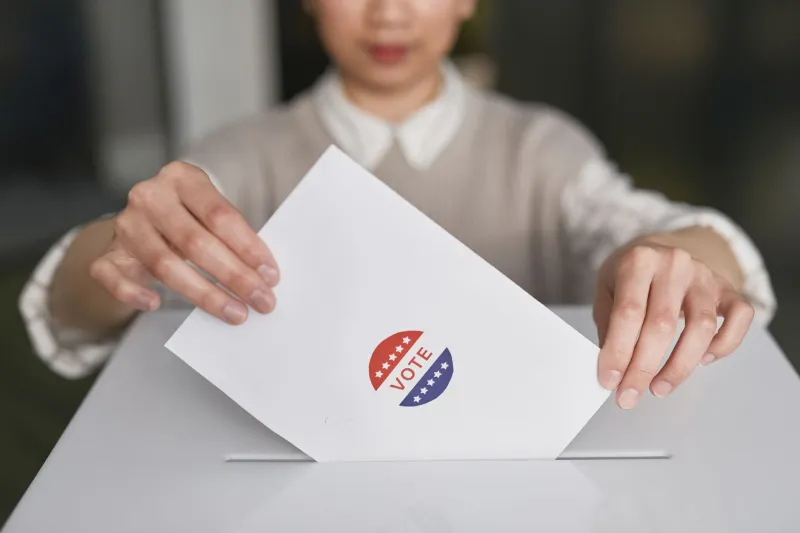
In a functioning democracy, the legitimacy of an election rests not merely on the announcement of a winner, but on the public's ability to confirm that the process was honest. That principle — intuitive, foundational, and widely celebrated in civics classrooms — is proving far more difficult to exercise in practice than most Americans realize.
Across the country, a loosely connected network of citizen activists, election integrity advocates, and nonpartisan watchdogs is pressing state governments for something that ought to be unremarkable: verifiable records of how votes were cast, counted, and certified. In some states, those requests are being met with sealed doors, redacted documents, and legal pushback that would strike many observers as disproportionate to the ask.
What Transparency Actually Looks Like — and Where It Breaks Down
Not all states treat electoral records the same way. States such as Colorado and Arizona have implemented robust post-election audit procedures, including risk-limiting audits that statistically verify outcomes with a high degree of confidence. These systems are not perfect, but they represent a genuine commitment to the idea that elections should be verifiable.
Other states lag considerably behind. In several jurisdictions across the South and parts of the Midwest, requests for cast vote records — the anonymized logs that show how individual ballots were tabulated by voting machines — have been denied outright, delayed for months, or fulfilled in formats that make meaningful analysis nearly impossible. Public records requests that should take days to process have stretched into years of legal wrangling.
The reasons officials offer for resisting disclosure vary. Some cite cybersecurity concerns, arguing that detailed voting system data could help bad actors identify vulnerabilities. Others invoke narrow statutory exemptions to public records laws. A few have simply claimed the records do not exist in the form requested — a claim that election security experts have disputed in multiple documented cases.
The Activists Pushing Back
The people demanding answers are not, by and large, partisan operatives or conspiracy theorists. Many are retired engineers, data analysts, former military officers, and longtime civic volunteers — individuals with the technical skills to interpret voting system data and the patience to navigate bureaucratic obstruction.
In Georgia, a coalition of residents spent the better part of two years attempting to obtain detailed audit logs from the 2020 general election. What they eventually received — after litigation and public pressure — was a partial dataset that independent analysts described as insufficient for a full reconciliation of vote totals. The state maintained that it had complied fully with the law. The activists disagreed, and the dispute remains unresolved.
In Wisconsin, a citizen-led effort to examine ballot chain-of-custody documentation in several counties revealed inconsistencies in how absentee ballots had been logged and transferred. State officials characterized the discrepancies as administrative errors with no bearing on outcomes. Watchdog groups argued that the inconsistencies, whatever their cause, underscored the need for more rigorous documentation standards.
These stories share a common thread: when citizens exercise their legal right to scrutinize the mechanics of democracy, they frequently encounter resistance that seems calibrated less to protect legitimate interests than to limit accountability.
Why Officials Resist — and What That Resistance Signals
It would be uncharitable — and inaccurate — to assume that every official who resists transparency requests is concealing wrongdoing. Many election administrators are genuinely understaffed, underfunded, and overwhelmed by the demands of running elections in an era of intense polarization. Requests for granular data can feel, from their perspective, like the opening move in an endless series of bad-faith challenges.
That context matters. But it does not fully explain why some states have actively lobbied against legislative proposals to expand public access to electoral records, or why certain jurisdictions have quietly amended their records retention schedules in ways that reduce the window during which audit data is available.
The harder truth may be this: transparency is inconvenient for institutions that have grown accustomed to operating without it. Elections are administered by human beings working within imperfect systems, and any honest accounting of the process will reveal errors, inconsistencies, and gaps. The question is whether those revelations are treated as opportunities for improvement or as threats to be suppressed.
Small Victories, Large Implications
Despite the obstacles, the transparency movement is accumulating wins. In Nevada, sustained pressure from citizen groups contributed to the passage of legislation requiring more detailed post-election reporting. In Pennsylvania, court rulings have expanded the scope of what election-related documents are subject to public records law. In Michigan, a coalition of advocates successfully challenged a county's refusal to release cast vote records, establishing a precedent that other jurisdictions will be compelled to consider.
These victories are incremental. They do not resolve the broader debate about election integrity, and they should not be mistaken for proof of widespread fraud — a claim the evidence does not support. What they do demonstrate is that citizens who press patiently and methodically for accountability can move the needle, even against institutional resistance.
The broader significance lies in what this movement represents: a reassertion of the principle that democratic legitimacy is not self-certifying. An election's integrity cannot simply be declared by the officials who administered it. It must be demonstrable to those who participated in it.
The Road Ahead
For the transparency movement to achieve lasting impact, it will need to move beyond reactive litigation and toward proactive legislative reform. Model audit statutes, mandatory cast vote record disclosure laws, and standardized chain-of-custody documentation requirements are the kinds of structural changes that would make electoral accountability the rule rather than the exception.
That work will require building coalitions that transcend partisan lines — a challenge in the current political environment, but not an impossible one. The desire to trust election outcomes is not a partisan value. It is a civic one. And the people demanding verifiable answers are, in the most fundamental sense, exercising precisely the kind of engaged citizenship that a free republic depends upon.
The audit trail revolt may be quiet, but it is serious. And it deserves to be taken seriously.